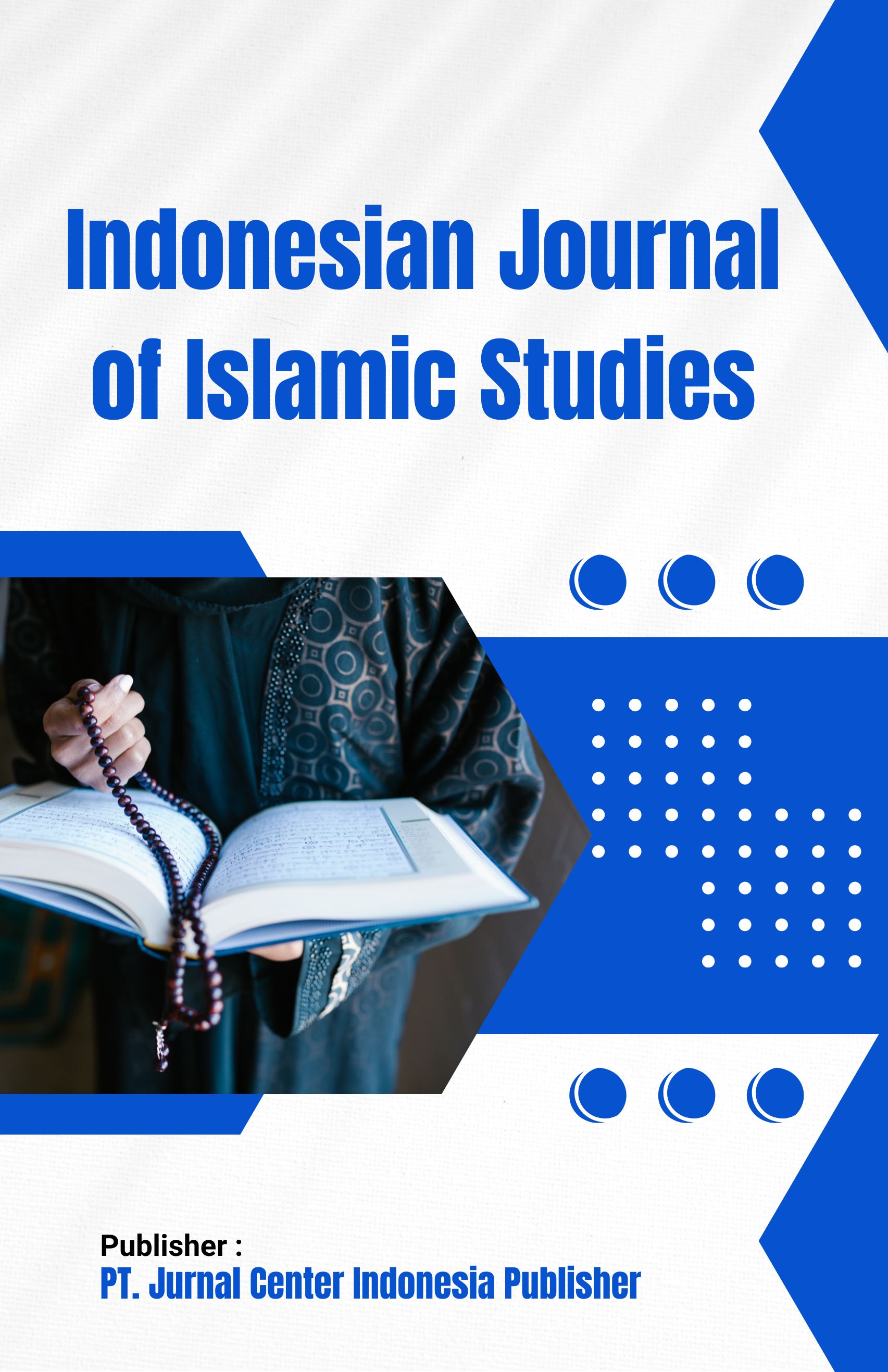
ART IN ISLAM: BEAUTY AS INVITATION – A PHILOSOPHICAL AND SOCIOLOGICAL STUDY OF ISLAMIC ART AS A FORM OF DA ‘WAH IN CONTEMPORARY SOCIETY
DOI:
https://doi.org/10.62567/ijis.v2i1.1920Keywords:
Islamic Art, Beauty; Daʿwah, Tawḥīd; Iḥsān, Fiṭrah; Moral Aesthetics; CompassionAbstract
Attraction to the beauty, pattern and symbolism of Islamic Art can draw observers to considerations of the divine. Beauty can serve to reflect the communication of Islam. This study explores the philosophical concepts of tawḥīd, or iḥsān and fiṭrah and the sociological concepts of reception and Cultural Translation to posit Islamic Art as the Islamic pedagogy of moral philosophy of art, a pedagogy of Islamic artistic inter-religious dialogue. Using Islamic calligraphy, mosque architecture and digital art as evidencebased qualitative research, the study documents the fit of the proposition and the aesthetic joys of art in beauty as a lingua franca of faith inter-culture. The study documents the experience of the ethics of Islamic Art as compassion in voiceless daʿwah. The aesthetic of Islamic Art becomes the moral pedagogy of spiritual compassion and the daʿwah aesthetic of work converted to the experience of beauty. The study proposes the lived experience of sincerity as beauty, unrivaled, is one of the most persuasive communications of Islam in the modern world in the compassionate and loving distance of the ethical.
References
Ali, N. (2019). Perceiving beauty: Visitors’ responses to Islamic calligraphy exhibitions. Journal of Visual Culture, 18 (3), 421–438.
Anderson, B. (2018). Museums and Islamic Art in Europe: a public sociology of aesthetics. Cultural Sociology, 12 (4), 501–518.
Asad, T. (2003). Formations of the secular: Christianity, Islam, modernity. Stanford University Press.
Bourdieu, P. (1993). The field of cultural production. Columbia University Press.
Bunt, G. R. 2018. Hashtag Islam: How Cyber-Islamic Environments Are Transforming Religious Authority. Chapel Hill: University of North Carolina Press.
Burckhardt, T. 1976. Art of Islam: Language and Meaning. London: World of Islam Festival Publishing.
Campbell, H. A. 2012. Digital Religion: Understanding Religious Practice in New Media Worlds. New York: Routledge.
Casanova, J. 1994. Public Religions in the Modern World. Chicago: University of Chicago Press.
Dabashi, H. 2005. Authority in Islam: From the Rise of Muhammad to the Establishment of the Umayyads. New Brunswick: Transaction Publishers.
Eickelman, D. F. and J. W. Anderson. 2003. New Media in the Muslim World: The Emerging Public Sphere. Bloomington: Indiana University Press.
Esack, F. 1997. Qur'an, Liberation and Pluralism. Oxford: Oneworld.
Frishman, M. and H. U. Khan. 1994. The Mosque: History, Architectural Development and Regional Diversity. London: Thames and Hudson. George, A. 2010. The Rise of Islamic Calligraphy. London: Saqi.
rabar, O. 1992. The Mediation of Ornament. Princeton: Princeton University Press.
Gruber, C. 2010. Images of the Prophet in Early Islamic Art, Muqarnas 27: 1–30.
Hall, S. 1997. Representation: Cultural Representations and Signifying Practices. London: Sage.
Mangera, M. 2020. Sustainable Spirituality: Cambridge Central Mosque and the Aesthetics of Ecology, Architectural Review 247: 1478, 42–53.
Nasr, S. H. 1987. Islamic Art and Spirituality. London: Golgonooza.G. Necipoğlu.
textit{The Topkapi Scroll: Geometry and Ornament in Islamic Architecture} (1995). Getty Publications.
Z. Sardar. textit{Reading the Qur'an: The Contemporary Relevance of the Sacred Text of Islam} (2006). Oxford University Press.
N. Shabout. textit{Modern Arab Art: Formation of Arab Aesthetics} (2013). University Press of Florida.
C. Taylor. textit{A Secular Age} (2007).
Downloads
Published
How to Cite
Issue
Section
License
Copyright (c) 2026 Dheen Muhammedh

This work is licensed under a Creative Commons Attribution-ShareAlike 4.0 International License.